

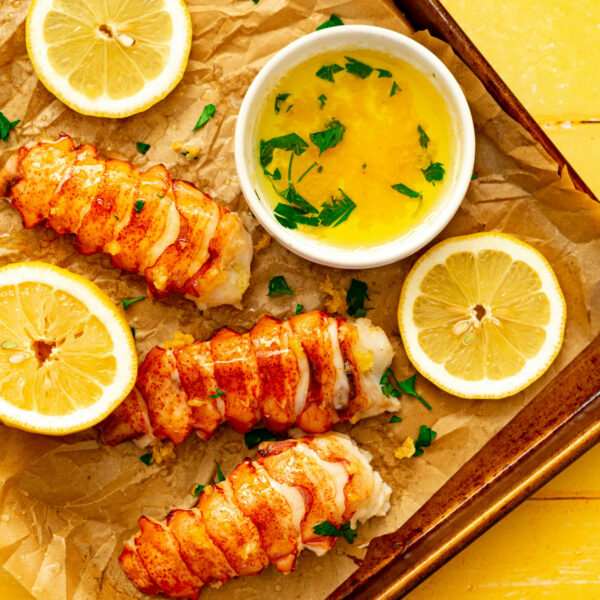
Sous Vide Lobster Tail sounds fancy, but is shockingly easy to make! With the magic of sous vide, you can’t mess lobster up, so no need to worry about a rubbery disaster. Use this sous vide lobster tail recipe to eat lobster tails as is, or to make delicious lobster rolls!
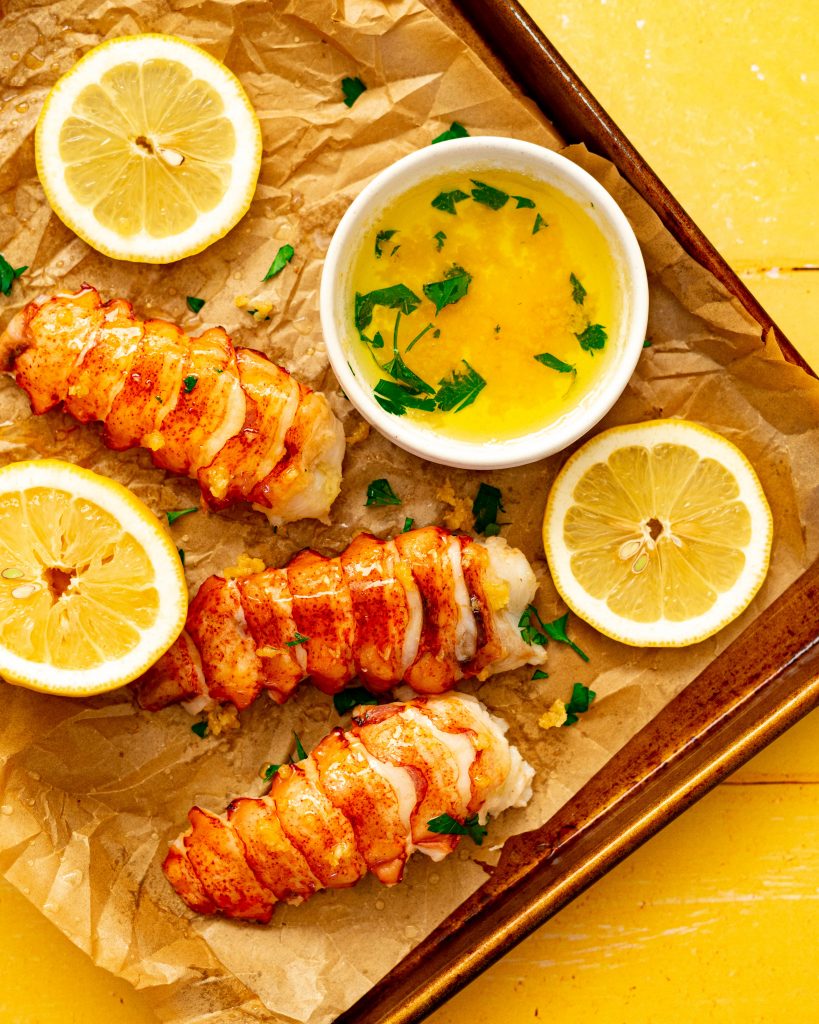
Sous vide lobster tails were something I put off cooking for awhile. For one, being an Oregonian, my shellfish of choice is Dungeness Crab. Two: lobster tails sound fussy and hard to make! Which, of course, makes them a perfect candidate for sous vide.
However, after a lot of research and testing, I found it. The magic numbers for delicious, perfect lobster tails. 135 degrees F for 45 minutes for the cook time and temp using an immersion circulator and a water bath.
Why I Love Sous Vide for Lobster Tails
My philosophy is “If it’s finicky to cook, it’s probably a good candidate for sous vide.” And lobster tails 100% apply here! If you’re curious to learn what sous vide is, click that link and go do some reading, then head back here.
If you overcook lobster tails they’ll be rubbery, chewy, and all around awful. Undercook them, and… ew. Which usually results in attempting to cook them longer, making the texture weird and likely overcooking them anyways.
Not so with sous vide! The magic of sous vide means the entire cooking environment (the water bath) is the exact temperature you want your lobster tails to come to, so it’s impossible to under or overcook them.

I’m so glad you found this recipe!
I can’t wait to be a part of your sous vide cooking today, and hopefully more to come!
I’ve been passionate about sous vide for almost a decade now. I take a different approach from other sous vide experts. While I love the science of sous vide, I want it to be an approachable cooking technique for everyone, and I don’t want you to sweat the details.
If you’re new to sous vide, make sure to read through this blog post or consider joining Sous Vide School.
I also have two sous vide cookbooks I think you’ll love: Everyday Sous Vide and Sous Vide Meal Prep.
Got questions?
Leave a comment and I’ll get right back to you!
Kitchen Equipment You’ll Need
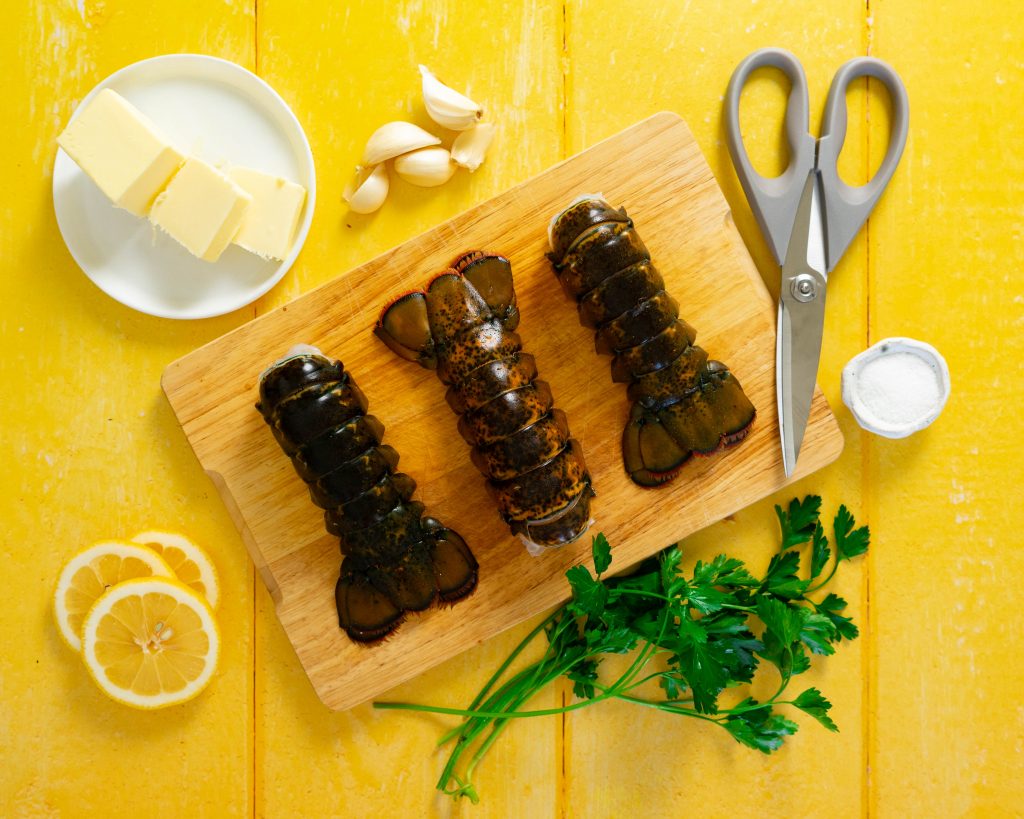
The good news is you don’t need much to make sous vide lobster tails! Just a few pieces of equipment and about 6 ingredients.
Here’s the equipment you’ll need to make sous vide lobster tails:
- Kitchen shears for cutting the lobster tail shell
- An immersion circulator – this is the device used for sous vide cooking
- A container (you can just use a stockpot, or my favorite sous vide containers are Everie containers)
- A handheld vacuum sealer, like the Vesta Precision Handheld Vac n Seal, or simply a plastic zipper top bag. I have a blog post all about air removal methods to help you out!
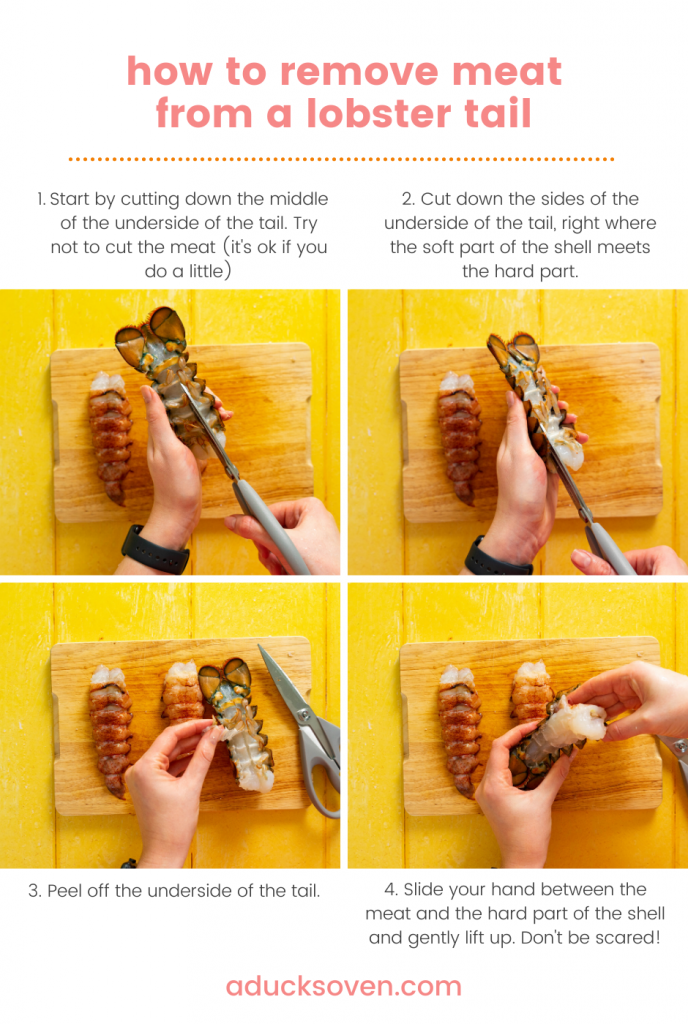
How to Remove Lobster Meat from the Tail
Some people insist on blanching the lobster tails first to make the meat easier to remove. This is not necessary! I am very much team “dirty as few dishes as possible” and had no issues removing the meat raw.
Unless you’re working with live lobster, save yourself the hassle and skip the boil.
Temperatures for Sous Vide Lobster Tail
I did a lot of research and experimenting before settling on a temperature for our sous vide lobster tails and I was thrilled with the texture! We decided to cook at 135 degrees F, but here are your options.
| 130 degrees F | 45 minutes | This will produce lobster that’s meaty, but more tender than lobster you’d get at a restaurant. |
| 135 degrees F | 45 minutes | This temperature is still tender, but a little closer to that traditional texture and not at all soft. |
| 140 degrees F | 45 minutes | This will produce a lobster with “traditional”, old-fashioned texture. |

Get the Recipe:
Butter Poached Sous Vide Lobster Tail
Ingredients
- 2-4 lobster tails
- Kosher salt
- 8 tbsp butter, divided
- 4 garlic cloves, minced
- 1/2 lemon, for sauce
- Chopped parsley, for garnish
- 1 lemon, cut into wedges, for serving
Instructions
- Preheat a water bath to your desired temp using an immersion circulator. 130 degrees F: This will produce lobster that’s meaty, but more tender than lobster you’d get at a restaurant.135 degrees F: This temperature is still tender, but a little closer to that traditional texture and not at all soft. (My favorite)140 degrees F: This will produce a lobster with “traditional”, old-fashioned texture.
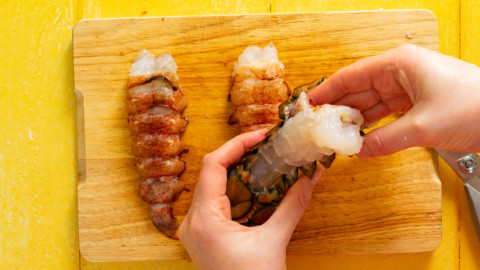
- Remove the meat from the tail. Use kitchen shears to cut down the middle of the underside of the lobster tail (you know it’s the underside because this part of the shell is soft and relatively easy to cut through). Do the same on the sides of the underside, where the soft part of the shell meets the hard part. Peel off the underside of the tail. Slide your fingers between the meat and the hard part of the shell to loosen it. Gently lift up to remove the meat.
- Lightly season the lobster meat with kosher salt. Usually I encourage heavy seasoning with sous vide, but not seafood.
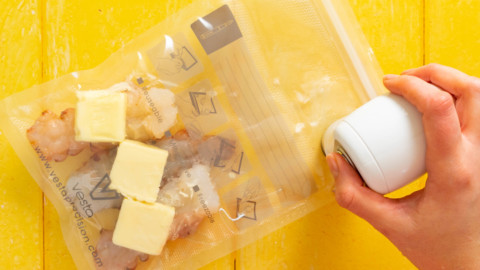
- Place the lobster meat in a bag. Add 2 tbsp of butter for each lobster tail, evenly distributing through the bag. I like a handheld vacuum seal bag for lobster – it's more gentle than a standard vacuum sealer because you can control the suction. You could also use a zipper top bag + the water displacement method.
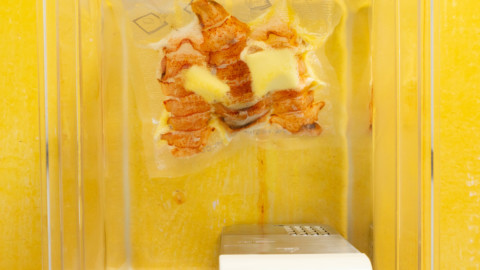
- After sealing, add the bag to the preheated water bath, making sure to keep the zipper on the bag above water. A chip clip or sous vide magnets work well. Cook for 45 minutes.
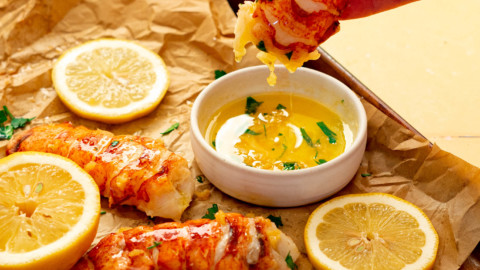
- While the lobster is cooking, make the garlic butter sauce. Melt 4 tbsp butter in a small saucepan. Add the garlic, and cook until just browned and fragrant. Remove from heat, squeeze the juice from half a lemon into the sauce, and add 1 tbsp chopped parsley.
- When the lobster is done, it’s ready to serve! Remove from bag and serve with the dipping sauce. Garnish with additional parsley and serve with lemon wedges for squeezing over the lobster.

Oh no, thanks for the heads up! I’m asking Porter Road about this. In the meantime, click here and scroll down a bit! https://shareasale.com/r.cfm?b=1521270&u=977090&m=80197&urllink=&afftrack=0
So simple and delicious! I love that you gave us temperature options for different textures. I went with a hybrid and used 138F since I was already doing a steak at that temperature. Came out perfect! And I basically took a bath in that butter sauce ????
I made this after a long weekend of no electricity and paired it with fettuccini pasta and roasted asparagus. I will no longer be making lobster any other way but this way.. It’s only been three days and I’m already craving lobster again. Removing the lobster from the shell prior to cooking seemed intimidating but the instructions were very clear and made the removal process super easy.
Cooked 6 lobster tails. I was initially intimidated with taking out the Lobster tails, but your instructions made the process easy. The Lobster was so tender and delicious. This will be the only way I cook Lobster in the future. Thank you!!!
Oh I’m so glad to hear this Cheryl! My exact hope for folks attempting sous vide lobster 🙂 So much easier than we think! Glad this recipe was helpful.
Can I take out of shell, place butter pats in bag and place in fridge over night? Doing Benedict’s for brunch.
Yes, indeed. I bagged it up in advance, and it turned out perfect 🥰
What happens with the butter and lobster juices after the sous vide cook? Are they mixed with the butter sauce?
Yes, they are!
We cooked 2 small cold water lobsters at 139 for 40 minutes and it was mushy and had no favor😢
Never have had a problem cooking with Anova!!!
I’m so sorry to hear this! This recipe has always given me incredible results. Were the lobsters cold to start?
In one of Thomas Keller’s cookbooks, he recommended plunging lobster tails into boiling water for two minutes and then transferring them to an ice water bath to stop the cooking. This makes the shells easier to remove. I have done this many times and it works well.
I’m a retired chef and have never found a better way of cooking lobster.
It really is the best!
Excellent!
A real game changer, completely delicious.
The recipe was not explicit about what to do with the butter and lobster juices in the cooking bag. Should these be added to the additional butter sauce being made. Should it be simmered to reduce the lobster juices and have just the butter remaining. I am making 2/11/26 for my brides 76th birthday so would appreciate a response.
Turned out perfect. Easy to take off shell, cooked at 135, perfect, did frittata in silicone cupcake, half recipe Awesome and perfect any. Mushrooms asparagus sweet onions were the veggies. So delish 😍
Hi Mindy, thank you so much for your comment! I’m so glad it turned out perfectly for you. Those veggie sides sound like a perfect pairing!
Do you take it out of the shell and just sous vie the meat?
Hi Richard! Yes, remove the meat from the shell and just sous vide the meat! Let us know how it turns out if you give this recipe a try!
Do you take it out of the shell and just sous vie the meat?
Leave she’ll in bag
Hi! I’m going to be using the sous vide for some boneless ribeyes-so ? Is: can I cook my lobster tails sous vide method-first- shock them in ice bath (in the sealed bag) fridge them, then before dinner service-rewarm them at a lower sous vide temp like 115 for 30 minutes then serve? Janet
Hi Janet! Yes you can, but I’d recommend keeping a very close eye on them when reheating. Seafood isn’t like other protein’s when sous viding – it is not nearly as forgiving and can get rubbery quick! I’d check on them at that 15 minute mark, and err on the side of serving a little cold vs. overcooking them. If you give it a try, let me know how it turns out!